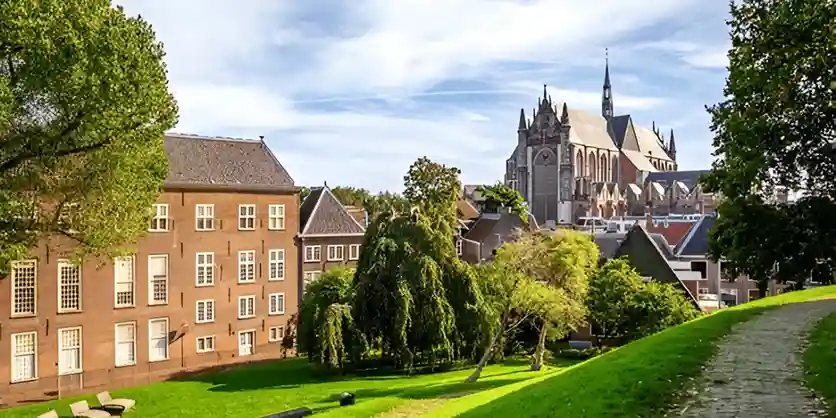
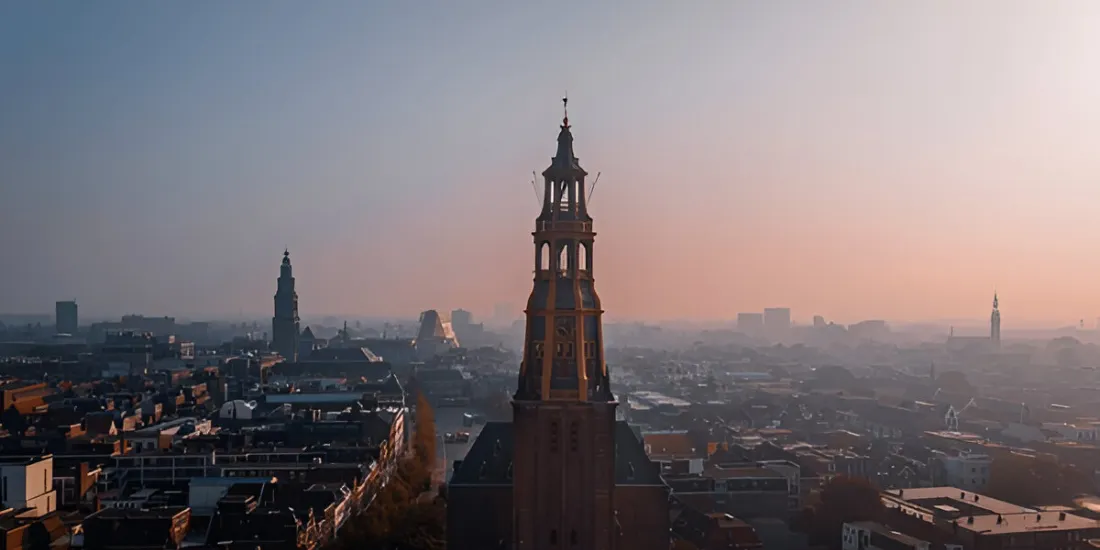
If you’re planning to study in Groningen in 2025, you’re in for one of the most unique student experiences in Europe. Study in Groningen, and you’ll live in a bike-filled, café-dotted, international bubble that somehow still feels like a small town. Study in Groningen is not just about research papers and lectures; it’s about living independently, finding your people, and discovering stroopwafels and wind-swept canals along the way.
Imagine this: It’s your first day. You’ve just taken the train from Schiphol, still slightly jetlagged, wheeling your suitcase (which weighs more than it should, let’s be real) across cobbled streets. The air smells fresh-maybe a bit like rain, because, well… this is the Netherlands. Bikes everywhere. Like everywhere. You panic-walk across the road and almost get hit by someone in a full suit casually riding a bike while texting. Welcome to Groningen.
Why You Should Study in Groningen in 2025
Let’s be honest: Groningen isn’t the first place that comes up when people think of studying abroad. But that’s kind of the point.
This small northern Dutch city is a hidden gem, especially for students. Around a quarter of the city’s entire population is made up of students. Yep, that’s around 50,000 of us-so you’ll never feel out of place.
Highlights:
- Consistently ranked in the top student cities in the Netherlands
- Home to the Top 100-ranked University of Groningen
- Nearly 100+ nationalities on campus
- Very student-friendly: everything’s walkable, bikeable, and cozy
- Everyone speaks English ridiculously well (like better than most native speakers, no joke)
- Nightlife? Absolutely happening. It’s one of the few Dutch cities where bars don’t have a closing time. Yes, really.
In 2025, the city’s even more international than before and finally has more all-vegan cafés than weed shops-so yeah, it’s growing with the times.
Top Universities to Study in Groningen and Popular Courses
Let’s break down where you might end up studying-and what it actually feels like.
1. University of Groningen (Rijksuniversiteit Groningen – RUG)
- Vibe: Historic buildings, research-heavy, global reputation. Think Ivy League, but with bikes and stroopwafels.
- Top Courses: International Business, Psychology, Law, Artificial Intelligence, Environmental Sciences
- Tuition Fees (non-EU): Approx. €8,000 – €15,000 per year depending on the program
- Real Talk: Lectures can be intense. Don’t skip your readings or you’ll be lost fast. But profs are approachable and chill outside class.
2. Hanze University of Applied Sciences
- Vibe: More hands-on, practical learning, internships from day one.
- Popular Courses: Physiotherapy, International Business, Engineering, Creative Media
- Tuition Fees (non-EU): Around €7,500 – €9,500/year
- Real Talk: Great if you prefer learning by doing. Good international support team. Campus feels like a mini-village.
Smaller institutions and exchange opportunities
There are also language schools, research programs, and exchange options through other European universities, especially if you’re doing Erasmus or a semester abroad.
Hot Tip: Hanze = practical. Groningen uni = academic. Think about your learning style before you choose.
Cost of Living and Budget Tips for Students in Groningen
It ain’t the cheapest, but hey, no part of the Netherlands really is. Still, Groningen is way more student-budget-friendly than cities like Amsterdam or Utrecht.
| Expense | Estimated Monthly Cost |
| Rent (shared room) | €400–€600 |
| Groceries | €150–€250 |
| Bike maintenance | €10 (but that €10 WILL happen) |
| Student health insurance | €100–€130 |
| Public transport | €0 (if you bike everywhere) |
| Nights out / extras | €70–€150 |
| Total (monthly) | €730–€1,200 range |
Budget Hacks:
- Buy a second-hand bike (check FB groups or Swapfiets)
- Cook! Eating out adds up fast
- Hit up Albert Heijn bonus deals or better yet-shop at Lidl or Jumbo
- Student discounts are a thing, ask everywhere
Scholarships and Financial Aid for Students Studying in Groningen
Money doesn’t grow on Dutch trees, but there are still ways to make it easier.
University Scholarships
- University of Groningen Talent Grant (for non-EU students in arts, law, economics)
- Eric Bleumink Fund – full funding for exceptional students (super competitive)
- Hanze Scholarships – partial tuition help for high-achieving international students
National and external options
- Holland Scholarship – €5,000 one-time grant for first-year non-EEA students
- Erasmus+ (for EU students or exchange semesters)
- Scholarships from your home country’s education department or embassy
Start looking for scholarships the same time as you apply to the program. They go fast.
How to Apply to Study in Groningen: 5 Steps for International Students
Step 1: Pick your program + school
Do you want theory and research? → Go for Uni of Groningen.
Prefer hands-on, project-based learning? → Hanze is your place.
Step 2: Check requirements + Prepare documents
These usually include:
- Transcripts
- Statement of Motivation
- Passport
- Proof of English (IELTS/TOEFL)
- Possibly a recommendation letter or video pitch
Step 3: Apply via Studielink.nl
It’s the Netherlands’ central application system. Kinda ugly-looking UI, but it works.
Deadlines range from January 15 to May 1, depending on course.
Step 4: Wait for results (+ interviews for some programs)
Some courses will invite you for admissions assessments or virtual interviews.
Step 5: Accept offer → arrange visa + housing
Congrats, you’re in! Get that IND visa appointment rolling right away and start searching for a room early (like, very early).
Visa and Work Regulations for Students Studying in Groningen
If you’re a non-EU/EEA student, you’ll need a residence permit for study purposes.
- Your uni will usually help you apply through IND (Dutch Immigration)
- Fees: around €220
- Required: Letter of admission, proof of finances, health insurance, TB test (for some countries), passport valid for entire stay
- Valid for the length of your study + possible 1-year Orientation Year visa afterward (so you can look for work)
Can you work?
Yes, but:
- 16 hours per week max during study periods
- Full-time during summer months
- You need a work permit (TWV) which your employer applies for. It’s doable, but not simple.
Student Housing Options for Those Who Study in Groningen
Housing is tricky. Not gonna lie.
1. SSH Student Housing
- Managed student housing. Decent rates, basic rooms. Shared kitchens/bathrooms.
- Apply ASAP-rooms go fast! Doubt you’ll get your dream location, but it’s something.
2. Kamernet / Hospi Housing
- Private rooms. Can be hit or miss.
- Hospi means living with a Dutch family or individual-good for language and culture, maybe not as chill with parties.
3. Room with other internationals
- Facebook Marketplace and international housing groups are full of listings.
- Watch out for scams-never pay before seeing contract!
Popular neighborhoods:
- City Centre – close to everything, but pricier
- Oosterpoort – trendy, arty, with events happening
- Paddepoel / Vinkhuizen – suburban, cheaper, closer to Zernike campus
- Korrewegwijk – diverse, a student fave
Daily Life, Food, and Student Culture While Studying in Groningen
Everyday life here? It’s like a chilled Netflix teen drama with Dutch subtitles.
- Lectures in the morning, studying afternoons, borrel (drinks) by the canal at night
- The city is safe, clean, and small enough that you always bump into someone you know
- Cafés like Black & Bloom or Bar Cilinder are student hotspots
- Street food? Go for friets met mayo, stroopwafels, or Vietnamese loempias from market stalls
- Big walking and biking culture. Outdoor city.
You’ll start your life here thinking: “why is it so quiet?” and by month three you’re part of it-calm, but not boring.
Internship and Career Opportunities After Studying in Groningen
Graduates from both major unis do pretty well, especially with that 1-year job-seeking visa.
- Uni of Groningen has career services, resume-building help, and start-up incubators
- Hanze’s programs almost always include internships
- Groningen itself is more academic, but close to hubs like Amsterdam, Rotterdam, and Berlin
Fields in demand (as of 2025):
- Green energy
- AI and Data
- Public Health
- Education and Social Sciences
- Tech & Engineering
Network early, go to career fairs, and yes-LinkedIn helps in the Netherlands. A lot.
Short-Term Study Programs in Groningen
Just testing the waters? No problem.
- RUG Summer/Winter Schools – intercultural communication, health sciences, environmental science programs
- Exchange Programs (Erasmus+, bilateral)
- Dutch language + culture crash courses
Usually last 1–6 weeks and are great for getting a feel for Groningen before a full degree.
Applying Timeline for Students Planning to Study in Groningen in 2025
| Month | To-do |
| Oct–Dec 2024 | Research unis + programs, check deadlines |
| Jan 2025 | Early application deadlines (esp. RUG) |
| Feb–Apr | Prepare documents, apply via Studielink |
| May–Jun | Housing + visa process |
| Jul–Aug | Book flights, join intro week groups |
| Sept 2025 | Welcome Week + Start your Groningen Life |
FAQs About Studying in Groningen for International Students
Absolutely, yes. Groningen is one of the most English-friendly cities in the Netherlands. Most people-especially students, university staff, and younger locals-speak fluent English. You can easily study, socialize, shop, and get around without needing to speak Dutch. But if you do want to learn a few Dutch phrases, people really appreciate the effort.
Because it’s the perfect mix of top-quality education, a vibrant international student scene, and a relaxed lifestyle. The University of Groningen is world-ranked, and there’s also the hands-on, career-focused Hanze University. Plus, the city is safe, student-centric, affordable compared to Amsterdam, and full of energy. Honestly, it’s low-key one of the best places to study in Europe.
Groningen is a true student city-around one in four people here is a student. It’s compact, bike-friendly, and has a fun, youthful vibe. There’s no official closing time for bars, people are super chill, and you can go from class to park hangout to canal-side bar in one day. Also, the city blends Dutch tradition with modern life really well-it’s peaceful but never boring.
Yes, almost everyone speaks English, especially around universities and city areas. You won’t struggle to communicate at all-even with government offices or doctors.
What’s special is how international and welcoming it feels. It’s a small city with a huge student population, great education, lively neighborhoods, and a strong sense of community. It really does feel like home.
First-Year Survival Checklist for Students in Groningen
✅ Buy a second-hand bike right away
✅ Learn where the closest Lidl is
✅ Join one student association (yes, even if it’s weird)
✅ Save your readings before class-they’re on Brightspace (you’ll forget otherwise)
✅ Get an OV chip card or bike everywhere
✅ Scan messages for signs of rain-it’ll sneak up on you
✅ Don’t be afraid to say “hi”-everyone’s open to chat
✅ Go to your uni’s intro week activities-they’re awkward, necessary, and fun
✅ Try Dutch cheese. You’ll end up taking a block home
✅ Take deep breaths on bad days. You’re doing something amazing.
And that’s it-from me, your unofficial guide to making it through your first year as you study in Groningen in 2025. It won’t be perfect (whose experience is?) but it’ll be one of the most defining years of your life.
See you by the canal. Probably holding a coffee and running late to class.