Study Abroad MBBS Process

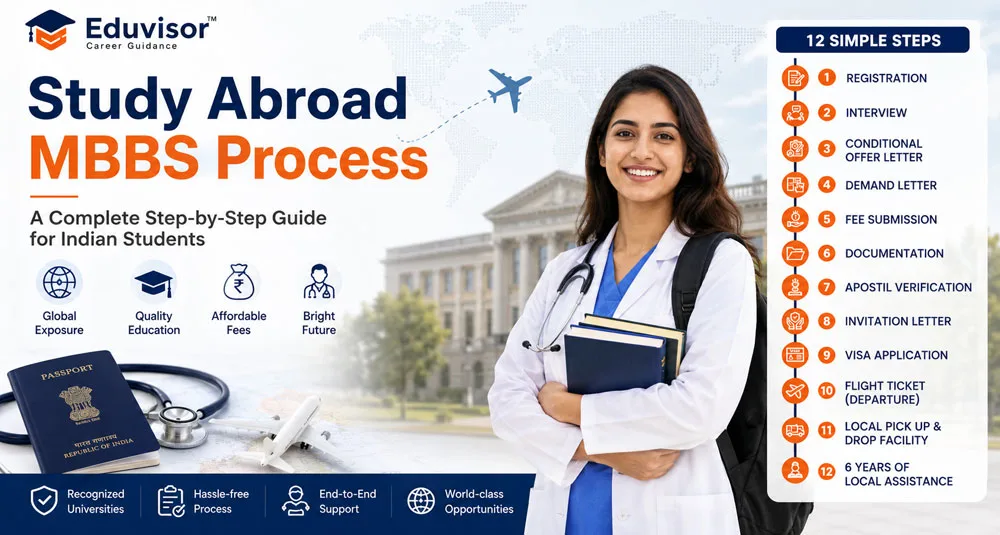
Study Abroad MBBS Process: The Complete Guide for Aspiring Doctors
Every year, thousands of Indian students dream of becoming successful doctors. However, due to limited government medical seats and expensive private colleges, many students choose to pursue MBBS abroad. Countries like Russia, Georgia, Kazakhstan, Uzbekistan, Kyrgyzstan, Nepal, and several European nations have become popular destinations because of affordable tuition fees, globally recognized universities, and quality medical education.
While studying medicine abroad offers excellent opportunities, many students and parents often feel confused about the admission procedure. Questions like How do I apply? What documents are required? When should I apply? How do I get my visa? are common.
This comprehensive guide explains the Study Abroad MBBS Process in simple language. By the end of this article, you’ll understand every step involved, from registration to reaching your university.
Why Understanding the Study Abroad MBBS Process Matters
Many students lose admission opportunities because they miss deadlines or submit incorrect documents. Understanding the admission process helps you:
- Avoid unnecessary delays
- Prepare documents in advance
- Reduce visa rejection chances
- Choose the right university
- Plan your finances effectively
- Begin your medical education without stress
Let’s explore each step in detail.
Step 1: Registration
Registration is the first and most important step in the Study Abroad MBBS Process.
During registration, students provide their:
- Personal details
- Academic information
- NEET qualification details
- Passport information (if available)
- Preferred country and university
After registration, an education consultant evaluates your profile and recommends universities based on:
- Budget
- Academic performance
- Career goals
- Preferred destination
- FMGE/NExT performance history
- Language preferences
Early registration increases your chances of securing seats in top universities.
Step 2: Personal Interview or Counseling
The second step involves a counseling session or interview.
This is generally not a competitive interview but an interaction to understand:
- Academic background
- Communication skills
- Career objectives
- Financial planning
- Country preferences
Students also receive guidance regarding:
- University rankings
- Hostel facilities
- Tuition fees
- Clinical exposure
- Weather conditions
- Living expenses
This stage helps students make informed decisions before applying.
Step 3: Conditional Offer Letter
After reviewing your academic profile, the university issues a Conditional Offer Letter.
This confirms that:
- Your application has been accepted.
- A seat is reserved.
- Admission is subject to document verification.
- Remaining formalities must be completed.
Receiving a conditional offer is an exciting milestone because it means you’ve successfully passed the initial screening.
Step 4: Demand Letter
Once the university confirms your admission, it issues a Demand Letter.
The demand letter contains:
- Tuition fee details
- Hostel charges
- Admission fee
- Payment deadline
- Bank account details
- Currency information
Students should carefully verify all payment instructions before transferring funds.
Step 5: Fee Submission
After receiving the demand letter, students pay the required admission fees.
Most universities accept payments through:
- International bank transfer
- SWIFT transfer
- Authorized payment partners
Always preserve:
- Payment receipts
- Bank acknowledgments
- Transaction confirmations
These documents may be required during visa processing.
Step 6: Documentation
Documentation is one of the most critical stages of the Study Abroad MBBS Process.
Common documents include:
- 10th Marksheet
- 12th Marksheet
- NEET Scorecard
- Passport
- Passport-size photographs
- Birth Certificate
- Medical Fitness Certificate
- Police Clearance Certificate (if required)
- Migration Certificate
- Transfer Certificate
Some universities may require additional documents depending on their regulations.
Double-check every document before submission to avoid delays.
Step 7: Apostille Verification
Many countries require educational documents to be authenticated.
This process is called Apostille Verification.
It verifies that your educational certificates are genuine and acceptable internationally.
Documents commonly apostilled include:
- Birth Certificate
- Academic Certificates
- Medical Certificate
- Police Clearance Certificate
This step is mandatory for many European and Central Asian countries.
Step 8: Invitation Letter
Once your documents are approved and fees are confirmed, the university issues an Invitation Letter.
The invitation letter is one of the most important documents because it is required for:
- Student Visa Application
- Immigration clearance
- Travel planning
It officially invites you to study at the university.
Step 9: Visa Application
Now comes one of the most crucial stages: The student visa.
Students submit:
- Passport
- Invitation Letter
- Admission Letter
- Visa Application Form
- Passport photographs
- Medical Insurance
- Bank documents
- Payment receipts
Some countries may require:
- Embassy interview
- Biometrics
- Medical examination
Once approved, the student receives the visa allowing legal entry into the destination country.
Step 10: Flight Ticket Booking
After obtaining the visa, students can book flight tickets.
Consider:
- Direct flights whenever possible
- University reporting dates
- Airport pickup availability
- Airline baggage allowance
Avoid booking flights before receiving visa approval.
Many universities also organize group departures for international students.
Step 11: Local Pickup & Drop Facility
A good education consultancy and university ensure students are welcomed upon arrival.
Most universities provide:
- Airport pickup
- Transportation to hostel
- Local guidance
- SIM card assistance
- Currency exchange support
- Hostel check-in
This support helps students adjust comfortably in a new country.
Step 12: Six Years of Local Assistance
The admission process doesn’t end after reaching the university.
Reliable overseas education consultants continue supporting students throughout their MBBS journey.
Support generally includes:
- Hostel assistance
- Visa renewal
- Residence permit
- Medical insurance
- Academic support
- Internship guidance
- Emergency assistance
- Parent communication
- Graduation support
Having local assistance provides peace of mind for both students and parents.
Common Mistakes Students Should Avoid
Many students make avoidable mistakes during the admission process.
Some common errors include:
- Applying late
- Choosing unrecognized universities
- Ignoring FMGE/NExT eligibility
- Submitting incomplete documents
- Missing fee deadlines
- Booking flights before visa approval
- Not checking hostel availability
- Ignoring visa requirements
Proper planning can prevent these issues.
Eligibility for MBBS Abroad
Before starting the Study Abroad MBBS Process, ensure you meet the basic eligibility criteria.
Generally, students should have:
- Completed Class 12 with Physics, Chemistry, and Biology
- Minimum qualifying percentage as per university requirements
- Qualified NEET (for Indian students intending to practice in India)
- Valid passport
Individual universities may have additional admission requirements.
Benefits of Studying MBBS Abroad
There are several reasons why students choose overseas medical education.
Some advantages include:
Affordable Tuition Fees
Many universities offer MBBS programs at significantly lower costs than Indian private medical colleges.
International Exposure
Students interact with peers from multiple countries, improving communication and cultural understanding.
Modern Infrastructure
Medical universities abroad feature advanced laboratories, simulation centers, and research facilities.
Globally Recognized Degrees
Many universities are recognized by international medical organizations, enabling graduates to pursue careers worldwide.
Better Clinical Training
Students receive practical exposure through affiliated hospitals and clinical rotations.
How to Choose the Right Medical University
Choosing the right university is just as important as completing the admission process.
Consider factors such as:
- Government recognition
- International accreditation
- Clinical exposure
- FMGE/NExT performance
- Medium of instruction
- Tuition fees
- Hostel quality
- Safety
- Student support services
- Internship opportunities
Research thoroughly before making your final decision.
Timeline of the Study Abroad MBBS Process
Although timelines vary by country and university, a typical admission journey looks like this:
- Registration
- Counseling
- University Application
- Conditional Offer Letter
- Fee Payment
- Documentation
- Apostille
- Invitation Letter
- Visa Processing
- Flight Booking
- Departure
- University Enrollment
Starting the process at least four to six months before the academic session is recommended.
Final Thoughts
The Study Abroad MBBS Process may seem complicated initially, but it becomes simple when approached step by step. From registration and counseling to visa approval and university arrival, every stage plays a vital role in ensuring a smooth admission experience.
Proper planning, accurate documentation, timely fee submission, and selecting the right university can significantly improve your chances of a successful admission. Most importantly, work with experienced professionals who provide transparent guidance and continued support throughout your medical journey.
If your dream is to become a globally qualified doctor, understanding the Study Abroad MBBS Process is the first step toward achieving that goal. Start early, stay organized, and make informed decisions to build a successful medical career abroad.
Also Read:
- MBBS in Bangladesh
- MBBS in Nepal
- MBBS in Tajikistan
- MBBS in Kyrgyzstan
- MBBS in Georgia
- MBBS in Uzbekistan
- MBBS in Russia
Frequently Asked Questions(FAQs)
Q1. What is the Study Abroad MBBS Process?
The Study Abroad MBBS Process includes registration, counselling, admission, documentation, fee payment, apostille verification, invitation letter, visa application, flight booking, and university enrollment.
Q2. Which documents are required for MBBS abroad?
Typically, students need their passport, Class 10 and 12 marksheets, NEET scorecard, photographs, birth certificate, medical certificate, and other documents depending on the destination.
Q3. How early should I begin the MBBS abroad application?
It is advisable to start the process at least 4–6 months before the intake to ensure enough time for documentation and visa approval.
Q4. Can I study MBBS abroad without IELTS?
Yes, many universities in countries like Russia, Georgia, Kazakhstan, Kyrgyzstan, and Uzbekistan offer MBBS programs without requiring IELTS.
Q5. Does the consultancy provide support after admission?
Reputed consultancies provide ongoing support such as visa renewals, hostel assistance, airport pickup, local guidance, and academic support throughout the MBBS course.